
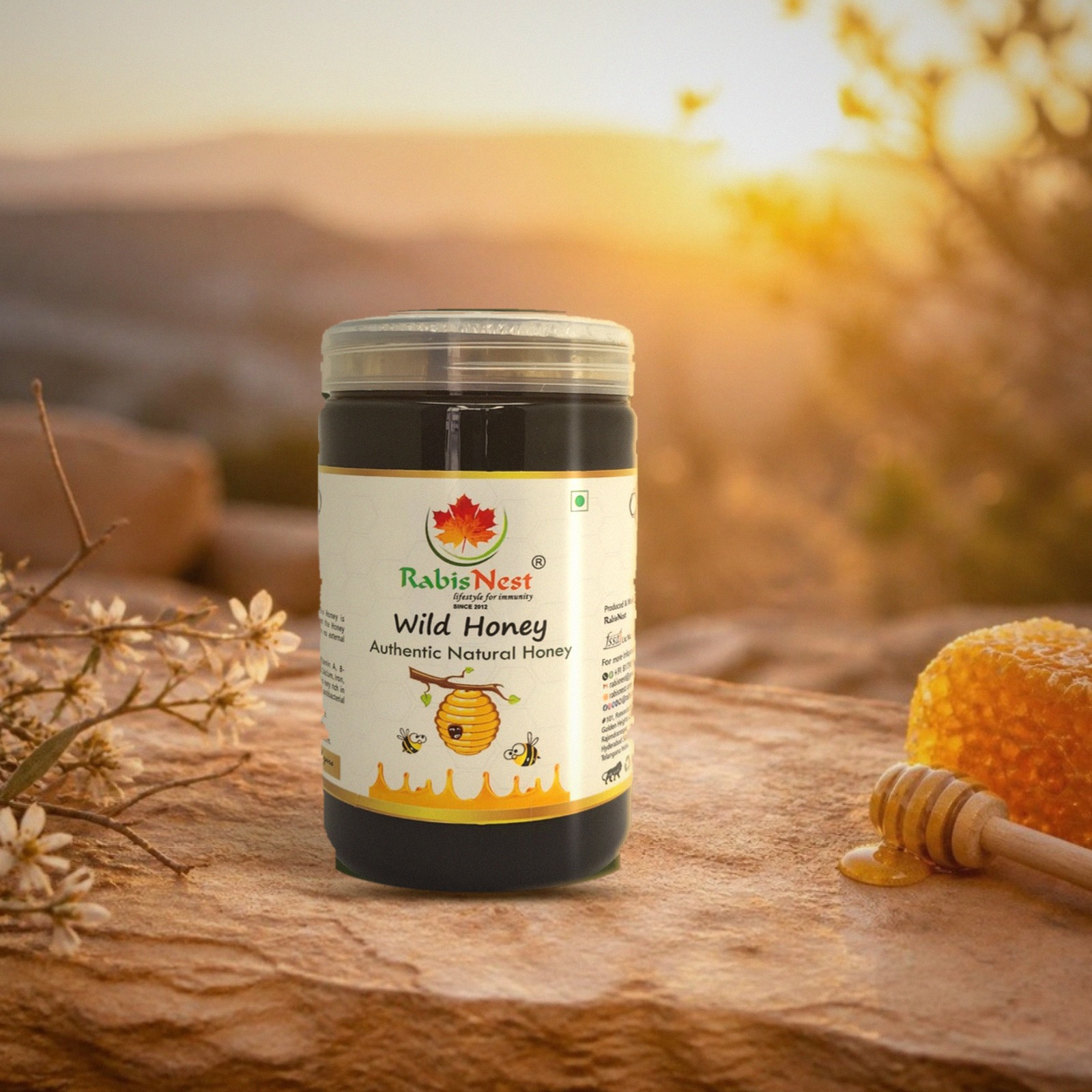
It is one of the most common messages we get on WhatsApp: “My honey has gone white and grainy. Is it spoiled?” The short answer is no. Crystallisation is one of the most natural things honey does, and in raw honey it is often a sign that very little has been done to it.
What is actually happening
Honey is a very concentrated mix of natural sugars, mainly fructose and glucose, with only a little water. There is more sugar dissolved in it than the water can comfortably hold, so over time some of the glucose comes out of solution and forms tiny crystals. Those crystals spread through the jar, and the honey turns thicker, paler and grainy.
Nothing has been added and nothing has been lost. The flavour stays the same; only the texture changes.
Why some honeys crystallise faster
- The flowers. Honey from blossoms that give more glucose, such as mustard, sets quickly, sometimes within weeks. Honeys richer in fructose stay liquid much longer.
- Temperature. Cool weather speeds it up. A jar kept in a cold room or a fridge will set far sooner than one on a kitchen shelf.
- Pollen and tiny particles. Raw, minimally filtered honey keeps natural pollen, which gives crystals something to form around. Heavily filtered and heated honey has had most of this removed, which is one reason some shop honey stays perfectly clear for years.
Is crystallised honey a sign of purity?
It is a good sign, but it is not proof on its own. Crystallisation tells you a honey has not been heavily processed; it does not tell you everything else about it. The honest way to judge honey is to know who made it, where it came from, and to be able to ask them questions. That is why we answer every message ourselves.
How to make it smooth again
- Close the lid tightly.
- Stand the jar in a bowl of warm water — comfortably warm to your hand, never boiling.
- Leave it for 15 to 30 minutes, stirring once or twice with a dry spoon, until it is smooth.
Avoid the microwave and direct heat. Gentle warmth is enough, and it keeps the honey’s delicate aroma intact. Many people actually prefer crystallised honey: it spreads beautifully on warm toast and does not drip.
Questions about your jar? Message us on WhatsApp — we are happy to help.